
What Does It Mean to Be MathFit?


A Parent’s Guide to Nurturing True Mathematical Thinking in an AI World
Rethinking “Good at Math”
Have you ever been asked:
“Are you good at math?”
Unsurprisingly, many answer by thinking about speed, grades, or memorization.
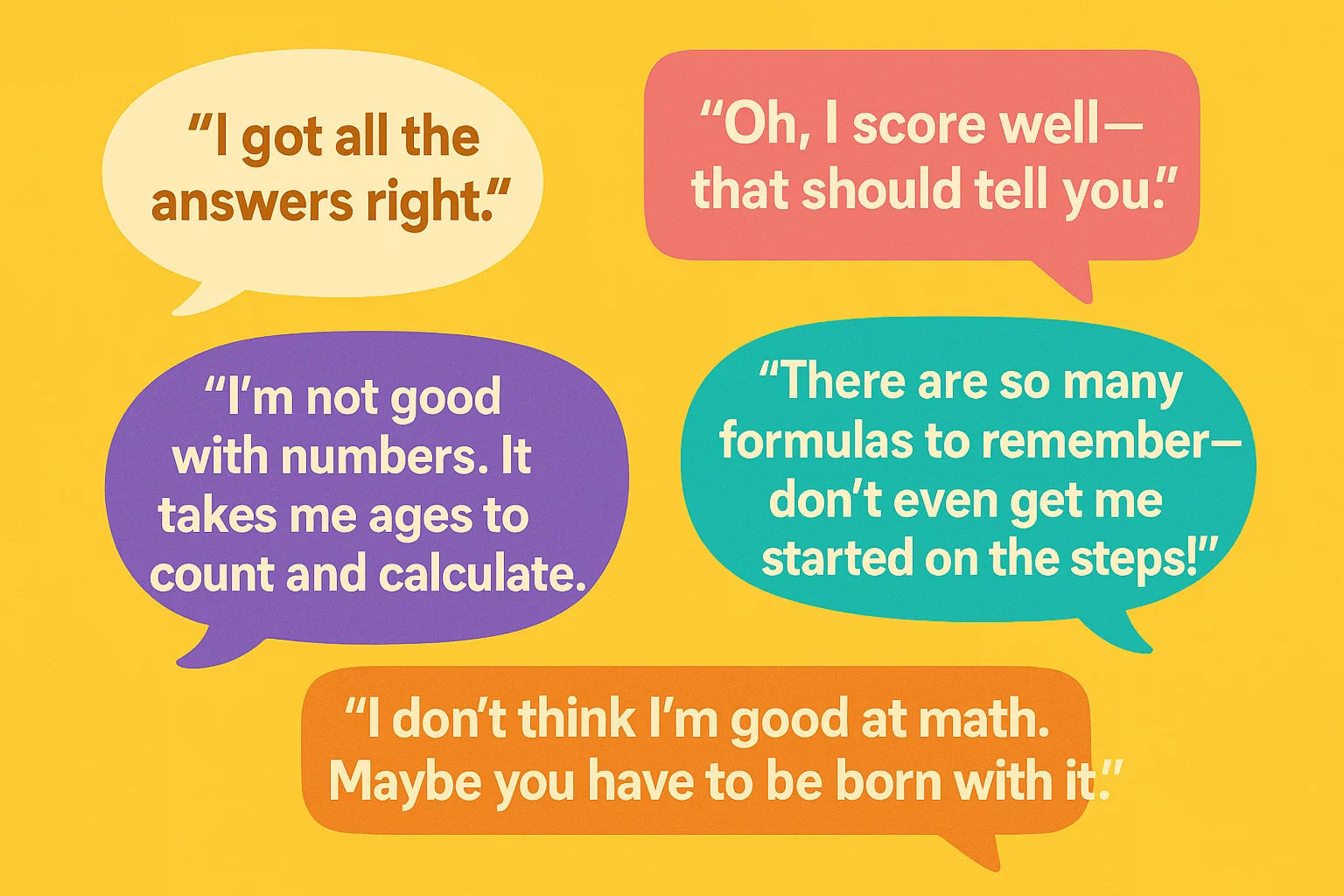
But in today’s world of calculators and AI tools like ChatGPT or Claude, being “good at math” means something entirely different.
👉 It’s not about how fast your child can calculate. ❌
👉 It’s about how your child thinks mathematically. ✅
Index
- Why Math Still Matters in the AI World
- Common Myths About Math Skills
- So, What is MathFit Really?
- The Two Pillars of MathFit™
- Is Your Child MathFit? Take the MathFit Test Now!
- MathFit vs Non-MathFit Kids
- Why Every Child Needs to Be MathFit
- How Parents Can Nurture MathFit Skills
- Next Step for Parents:
Curious where your child stands?
Why Math Still Matters in the AI World
AI can now solve problems instantly. But…
AI can recognize patterns → only humans can judge which patterns are valuable.
AI can follow instructions → only humans can create new instructions.
AI executes.
Humans imagine.
Math equips kids with the thinking that AI cannot replace.
Common Myths About Math Skills
❌ Speed = Skill → Even AI can solve quickly. True skill is reasoning.
❌ Memorization = Competence → Knowing formulas ≠ understanding why they work.
❌ Always Right = Excellence → MathFit kids embrace mistakes as learning.
❌ Genius = Necessity → Every child can develop mathematical fluency.
Being MathFit isn’t about speed, memory, or genius — it’s about mindset and skills.
So, What is MathFit Really?
Being MathFit isn’t about being a human calculator.
It is about:
|
🔹 Breaking down complex problems into simple steps |
🔹 Seeing patterns and connections everywhere |
|
🔹 Approaching uncertainty with confidence |
🔹 Applying logical reasoning in real life |
👉 In other words: MathFit = Mathematical Fluency.
The Two Pillars of MathFit
A mindset that says:
“I can improve with effort.”
“Why does this work?”
“Let me try another approach.”
“I can figure this out.”
The abilities to:
Understand math concepts deeply.
Explain thinking clearly.
Reason step by step.
Break down big problems.
Estimate and check answers.
👉 Mindset + Skills = MathFit.
MathFit kids build both mindset and skills — not just one. That’s how they turn every math struggle into strength and anxiety into confidence.
Is Your Child MathFit? Take the MathFit Test Now!
Here’s a quick MathFit™ Test you can try at home. For each statement, rate your child:
0 = Never | | 1 = Sometimes | | 2 = Always
Part A: MathFit Mindset
- My child asks “why” or “how” when learning, not just “what.” [ ]
- When they make a mistake, they treat it as a learning opportunity. [ ]
- They enjoy puzzles, brain teasers, or strategy games. [ ]
- When stuck, they try multiple approaches before giving up. [ ]
- They believe they can improve with effort. [ ]
Mindset Score: ___ / 10
Part B: MathFit Skills
- My child is clear about the math concepts they’ve learned. [ ]
- They can explain their thinking to others. [ ]
- They check if their answers make sense. [ ]
- They make reasonable estimates before calculating. [ ]
- They see patterns in numbers, shapes, or everyday life. [ ]
Skills Score: ___ / 10
Scoring Guide
- 0–8: MathFit Opportunity → Needs support to build confidence & basics.
- 9–12: MathFit Potential → Untapped ability; regular practice will unlock it.
- 13–16: MathFit in Progress → Strong foundation; now refine specific areas.
- 17–20: MathFit Champion → Excellent mindset & skills; keep them challenged.
MathFit vs Non-MathFit Kids
| 💡 MathFit Child | 📄 Non-MathFit Child |
|---|---|
| 🔹 Curious | 🔸 Memorizes formulas |
| 🔹 Exploratory | 🔸 Focuses on grades |
| 🔹 Explains thinking | 🔸 Struggles with unfamiliar problems |
| 🔹 Flexible with new challenges | 🔸 Hesitant with new or unfamiliar challenges |
MathFit kids think beyond formulas — they learn how to think.
Why Every Child Needs to Be MathFit
A MathFit child doesn’t just ace tests. They:
- Solve unfamiliar problems with confidence.
- Apply math in daily life (cooking, sports, shopping).
- Build resilience for careers in a tech + AI world.
How Parents Can Nurture kids to be MathFit
Parents can nurture MathFit mindset and skills at home through small daily actions.
| 💡 Parent Action | 📄 Tip |
|---|---|
| 🔹 Encourage Explanation | 🔸 Ask: “Can you explain how you solved this?” |
| 🔹 Pose Open-Ended Problems | 🔸 Give challenges with more than one solution. |
| 🔹 Praise Strategy Over Correctness | 🔸 Focus on process, not just answers. |
| 🔹 Celebrate Curiosity | 🔸 Reward “what if” questions. |
| 🔹 Connect Math to Real Life | 🔸 Cooking, shopping, games, sports. |
Curious where your child stands?
Join over 200,000+ MathFit children who are transforming the way they think about math.
Give your child the confidence to explore, the skills to solve, and the mindset to turn every challenge into growth.
Unlock their true math potential and set them on a path to curiosity, resilience, and lifelong learning.

About the Author
Pooja Purohit
Passionate global educator dedicated to fostering curiosity and creativity in students worldwide. Currently, I specialize in making Science engaging and accessible. Through innovative curriculum design and hands-on activities, I strive to inspire a love for exploration and discovery.
Let's connect and collaborate on shaping the future of education together!
View My LinkedInRead more
AP Statistics 5/5: Goutham's Perfect Score in Grade 11
Goutham earned a perfect 5 out of 5 on AP Statistics. With his Cuemath tutor Rishabh's structured guidance and hours of his own practice, disciplined preparation turned into a top score.
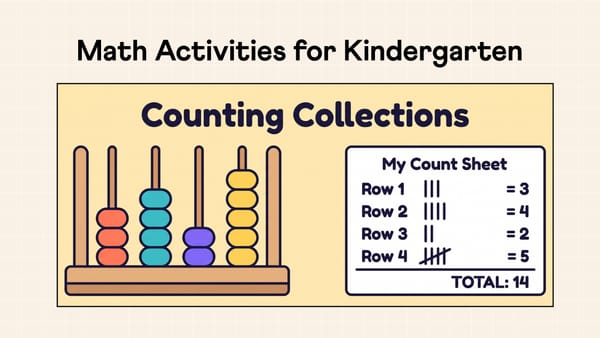
Back-to-School Math Activities for Kindergarten (2026)
Nine playful, hands-on math activities to start the kindergarten year strong: counting, shapes, patterns, sorting, guessing, and graphing. Each uses everyday materials, includes three levels, and takes just 10 to 15 minutes. Recommended by Cuemath tutors.
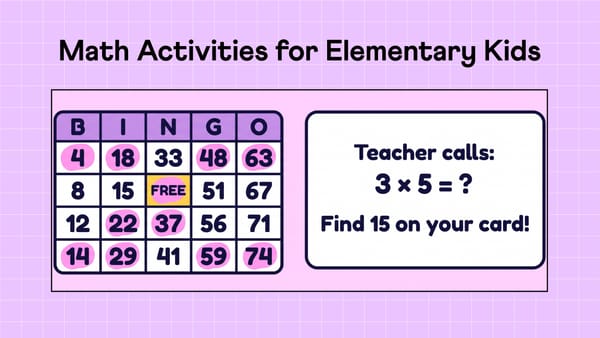
Back-to-School Math Activities for Elementary Students
14 hands-on back-to-school math activities for elementary students, from counting and shapes early on to multiplication, estimation, and place value later. Each uses everyday materials, has three levels, and comes with a comparison table. Recommended by Cuemath tutors.
Is Cuemath Good for High School? Inside 5 Student Journeys
Here are five different Cuemath high school journeys, from a first perfect algebra test to a perfect AP Calculus BC score, and what actually happened in their classes.