
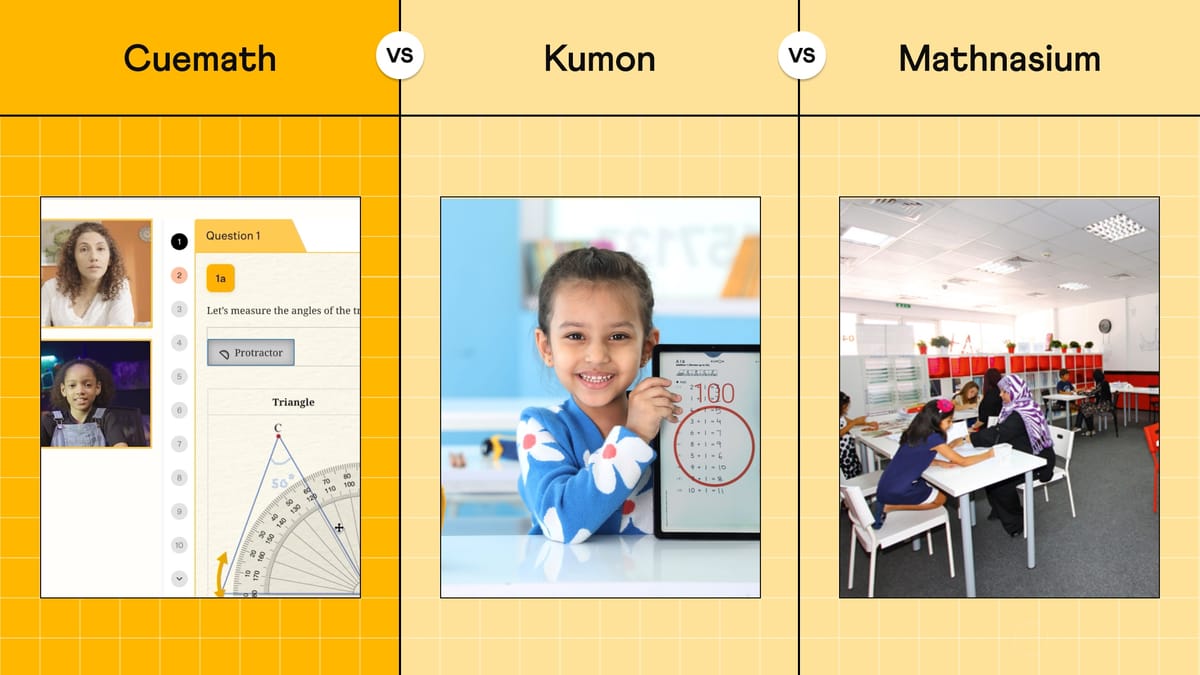
Cuemath vs Kumon vs Mathnasium for High School Math: A Comparison
Does the platform teach tricks for a test, or help student to think aloud, explain their reasoning, and build confidence?

High school math shifts from simple calculation to deep reasoning. It’s no longer enough to get the answer; students need to understand why it works.
My criteria is simple: Does the platform teach tricks for a test, or help student to think aloud, explain their reasoning, and build confidence?
From that lens, here's how I see Cuemath, Kumon, and Mathnasium:
- Kumon: Best for building calculative speed, discipline, and self-study habits through daily worksheets.
- Mathnasium: It focuses on fixing specific knowledge gaps in a supportive, small-group setting to rebuild confidence.
- Cuemath: It uses 1:1 personalized online math tutoring to build strong foundations for school, competitions, and beyond.
Key Takeaways
- Kumon: The Mastery-Through-Repetition Model: Kumon is all about the grind (in a good way). If you want your child to develop strong self-study habits through daily, incremental worksheet practice, this is the route to take.
- Mathnasium: The Confidence-Through-Remediation Model: Mathnasium pinpoints exactly where your child is struggling and fills those specific gaps. It’s a small-group setting that seems designed to rebuild a student’s confidence.
- Cuemath: The Thinking-Through-Mentorship Model: Think of Cuemath as (Kumon + Mathnasium + 1:1 personalized approach). They don’t just focus on getting the answer right; the pedagogy is designed to foster deep conceptual understanding.
Matching the Program to Your Child’s Goal
Every child has a different set of priorities that change with time and grade level. I have compiled this table to see which program actually delivers on that specific goal.
Kumon: The Methodology of Discipline and Mastery
I view Kumon as the boot camp of math prep. It’s a highly structured system engineered for discipline.
Here is how Kumon actually works:
- The Daily Grind: Students typically do about 30 minutes of worksheet practice every single day—two days at a center and five days at home.
- The Worksheets Are the Teacher: Kumon expects students to learn directly from the materials, not from a lecture. The goal is for students to think of solutions by themselves.
- Mastery Through Repetition: Students move through hundreds of small-step worksheets. You don't move on until you’ve mastered the current problem.
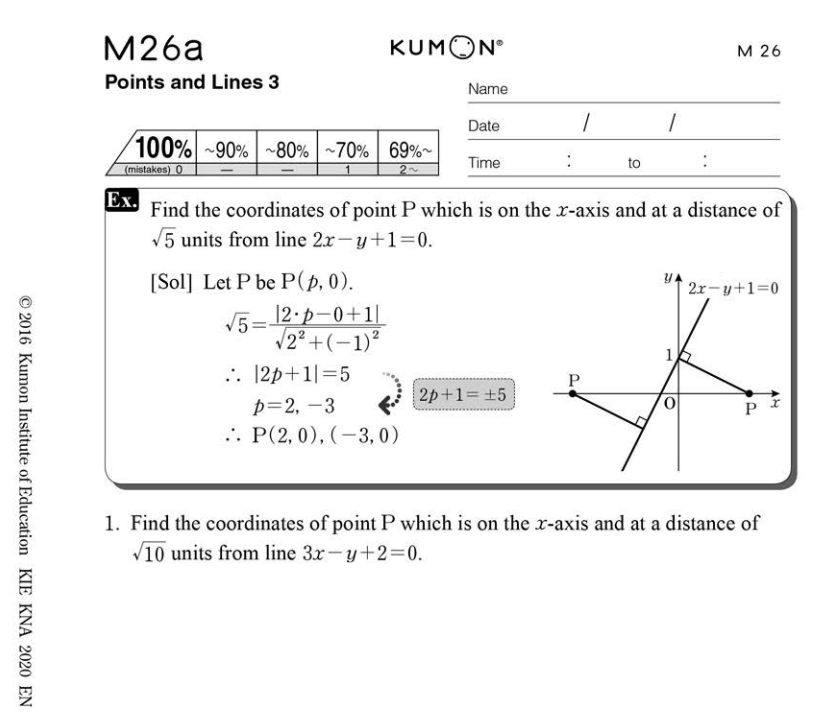
Here's what Kumon worksheets look like 👇. They are just like old-school traditional worksheets.
What Parents (and the Data) Are Actually Saying About Kumon?
The Good: It builds on calculative speed and discipline.
If we judge Kumon strictly by its own goals (building fluency and computational speed), it is quite effective.
- I found a student success story on their website where a 7th-grade Kumon student scored a perfect 800 on the math SAT.
- A 2020 study by the Education Policy Institute (EPI) backed this up, finding that Kumon students are typically "over a year ahead of the national average" by the end of primary school.
(Sources: Kumon Blog, EPI Study)
The Challenge: I was looking for some real parent reviews for one thing —critical thinking—one key skill needed for high school success.
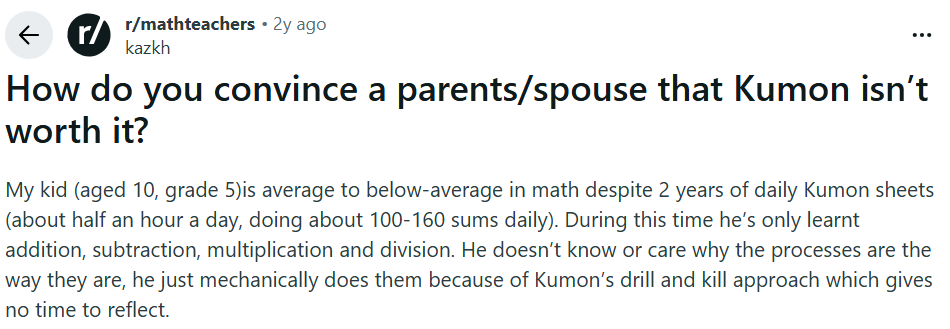
One parent on Reddit described Kumon as a drill-based approach with no time to reflect. He mentioned that while his son could mechanically solve the problems, he didn't know or care why or how a certain formula or equation works.
It definitely addresses the core gap I see with Kumon: Kumon teaches the how, but completely misses the why.
Mathnasium: The Repair and Rebuild Methodology
Mathnasium positions itself as the conceptual, personalized alternative to Kumon.
Here's how Mathnasium works:
- Pre-assessment: Every student starts with a comprehensive diagnostic assessment (both written and verbal) to pinpoint their exact strengths and weaknesses.
- Customized Learning Plan: Instructors create a personalized learning plan. The explicit goal of this plan is to close the student's knowledge gaps.
- Teach for Understanding: Instructors aren't just grading papers; they are trained to use mental, verbal, and visual techniques to help kids actually understand the math.
- The In-Center Model: Instruction happens face-to-face in a small-group environment (usually a 1:4 teacher-to-student ratio). It’s designed to be supportive and social, rather than just quiet desk work.

Mathnasium User Reviews: Good for Confidence, Not Great for High School
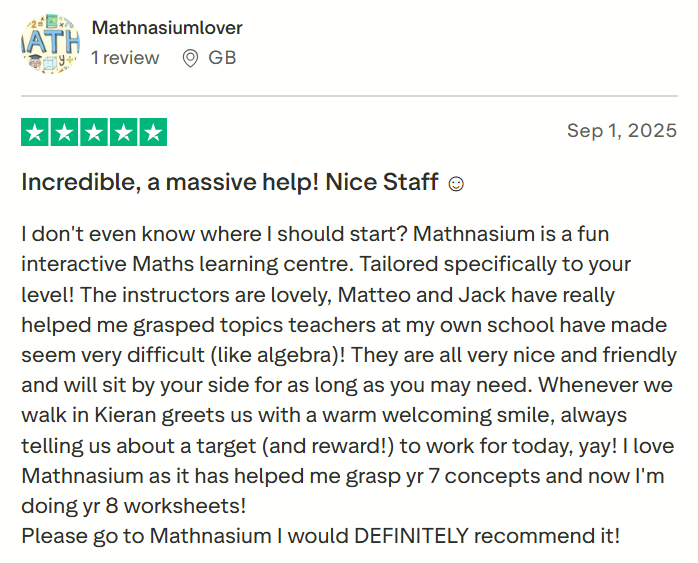
The Positive Side: When I compared the Trustpilot reviews, Mathnasium is very different from Kumon. I saw so many Trustpilot reviews quoting that Mathnasium centers are fun and engaging.
The Challenge: However, despite the nice environment, I found plenty of reviews on Reddit that specifically highlighted that it is not meant for high school students.
Also, since each location is owned by a different person, the quality changes. One user said it really depends on the center and its instructors. You might get a good one, or you might not.
The Cuemath Difference: Real 1:1 Mentorship
Looking at how it works, Cuemath’s vision is to solve the problems I saw with Kumon and Mathnasium. It fills the gaps by focusing on personalized attention and conceptual understanding.
- 1:1 Live Classes: At Cuemath, your child gets 100% of the teacher's attention. There are no other students to distract them or split the teacher's time.
- Focus on the Why: While Kumon focuses on how to solve a problem quickly, Cuemath focuses on understanding the logic behind the formulas or math equations.
- Tutors: Cuemath hires only the top 1% of tutors globally trained in both math and child psychology. Your child learns with the same tutor for the long term. This helps them build trust and allows the tutor to really understand your child's learning style.
Experience the Cuemath Difference for Free
Get matched with an expert tutor and receive a personalized plan after the trial class. Level Up Beyond School.
Book a Free ClassK-12 Tutoring + Test Prep + Enrichment
A unique feature of Cuemath's proprietary platform is the Talk-o-Meter. A measurable parameter for critical thinking is the ability to explain your reasoning. Unlike any other platform, Cuemath is actively measuring this which I think is super cool.
Cuemath's talk-o-meter feature (Video taken from website)
What do Parents and Students Say About Cuemath?
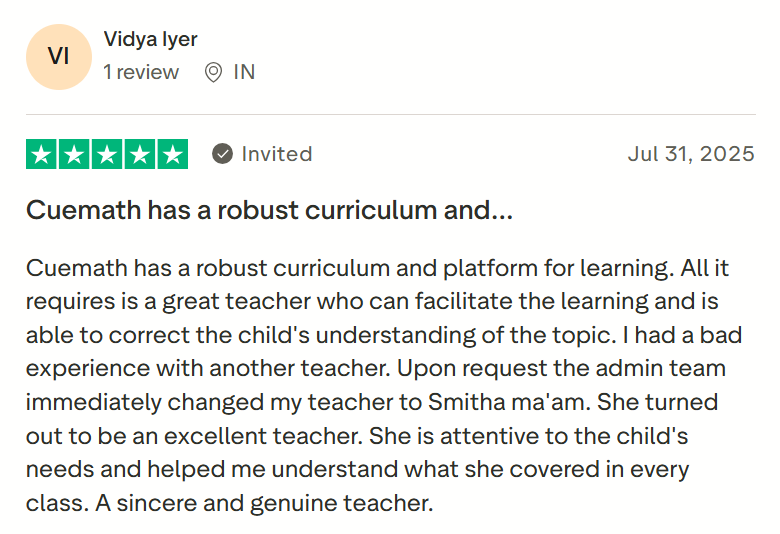
Majority of the parent reviews I read about Cuemath on Trustpilot, I saw testimonials like:
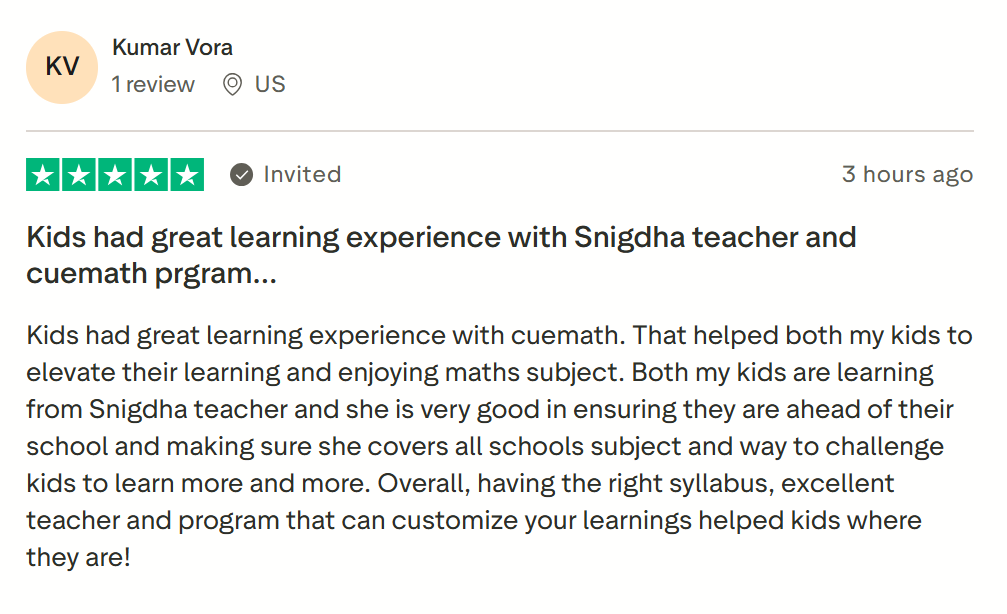
This is the real goal.
In another student success stories, I read how a Grade 10 Cuemath scored 1520/1600 SAT score, placing him in the 98th percentile nationally in the USA.
 Cuemath
Conclusion: What Actually Works for High School?
High school math (like Calculus and Trigonometry) is complex and abstract. You can't learn it effectively by just filling out worksheets alone (Kumon) or splitting a teacher's attention with three other students (Mathnasium).
In my opinion, Cuemath is the only one of the three that is actually built to handle high school complexity.
- 1:1 Tutoring: They don't just answer; they cue the student to find it.
- Verbal Reasoning: They motivate the students to talk through their logic (using their "Talk-o-Meter").
- Mentorship: You get a long-term mentor, not a random instructor.
My Pro-Tips for Parents: How to Get the Most Out of Cuemath?
Since the 1:1 model relies heavily on the right fit, don't just sign up and walk away.
Finding the Right Fit: The biggest advantage of Cuemath is the personal connection. If your child doesn't click with the assigned tutor immediately, ask for a change. From what I’ve seen, they are very happy to switch tutors until you find the perfect match.
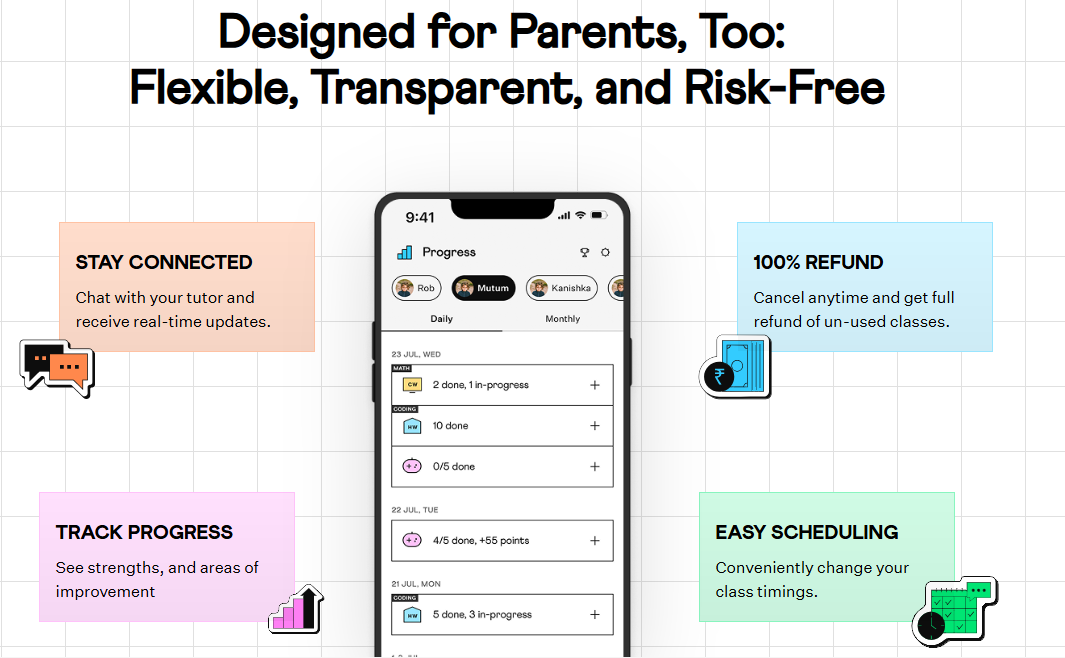
Stay in the Loop: You don't need to sit next to your child during class. Instead, make use of their Parent App. It gives you real-time progress reports so you can see exactly which concepts they are mastering and where they might still need help.
Not Sure Which Program Fits? Try a Free 1:1 Cuemath Class
Get matched with an expert tutor and receive a personalized plan after the trial class. Level Up Beyond School.
Book a Free ClassK-12 Tutoring + Test Prep + Enrichment
Frequently Asked Questions (FAQs)
Ques: What is the main difference between Kumon, Mathnasium and Cuemath?
Ans: The main difference lies in their teaching models. Kumon relies on self-study and repetitive worksheets to build speed. Mathnasium uses small groups (1:4 ratio) to fix foundational gaps. Cuemath uses a 1:1 personalized tutoring model focused on deep conceptual understanding and critical thinking.
Ques: Which math program is best for high school students?
Ans: Cuemath is the best choice for high school math (Algebra, Calculus, Trigonometry). Unlike Kumon’s drills or Mathnasium’s group remedial sessions, Cuemath provides the 1:1 attention and expert guidance needed to master high school concepts.
Ques: Is Kumon good for critical thinking?
Ans: Kumon is excellent for calculation speed and discipline, but several reviews online say it is less effective for critical thinking. Parents often describe it as a drill and kill method that teaches students how to solve a problem, but not why the method works.
Ques: Is Mathnasium better than Kumon for remedial math?
Ans: Yes, if a student is behind grade level, Mathnasium is generally better than Kumon. Mathnasium creates a customized learning plan to fill specific knowledge gaps and rebuild confidence, whereas Kumon forces students to restart from a lower level and work their way up linearly.
Ques: Does Cuemath help with test anxiety?
Ans: Yes, Cuemath addresses test anxiety by pairing students with a consistent, long-term tutor. This builds a high-trust environment where students can ask questions without fear of judgment, shifting the focus from "performing" to "understanding."
Ques: Why is the Cuemath "Talk-o-Meter" important?
Ans: The Talk-o-Meter is unique to Cuemath. It measures how much the student is speaking versus the teacher. This ensures the student is actively explaining their reasoning—a key indicator of developing critical thinking and independence—rather than just passively listening.

About the Author
Nikita Joshi
Math Educator | Writer @ Cuemath
Math educator & writer by day, storyteller by night.
View My LinkedIn
Read more
Cuemath vs Khan Academy: Which is Better for US Students in 2026?
In this comparison, we review Cuemath and Khan Academy side by side, covering teaching format, pricing, and what US parents say. We review both platforms grade by grade and by learning need so you can find the right fit.

CogAT 97th Percentile and Gifted Placement in Grade 7: Harsheen's Story
Harsheen Kaur scored in the 97th percentile on the CogAT and qualified for the Gifted and Talented program in Grade 7. Two years with Cuemath turned a student who was uncomfortable with math into one who stays ahead of her class.
Cuemath vs Mathnasium: Which is Better for US Students in 2026?
For this comparison blog, we review Cuemath and Mathnasium side by side, covering teaching format, pricing, tutor quality, and what US parents say. We break it down grade by grade so you can find the right fit.

Continental Mathematics League Gold Medal: The Grade 2 Journey of Aayansh
Aayansh is a Grade 2 student in the USA who won a gold medal at the Continental Mathematics League two years in a row. This is a story about what happens when a naturally curious child meets the right learning environment.