
Cuemath vs Bhanzu: Which One is Better For Your Child in 2026?
When choosing between Bhanzu and Cuemath, the decision comes down to the specific goal: speed versus conceptual depth.

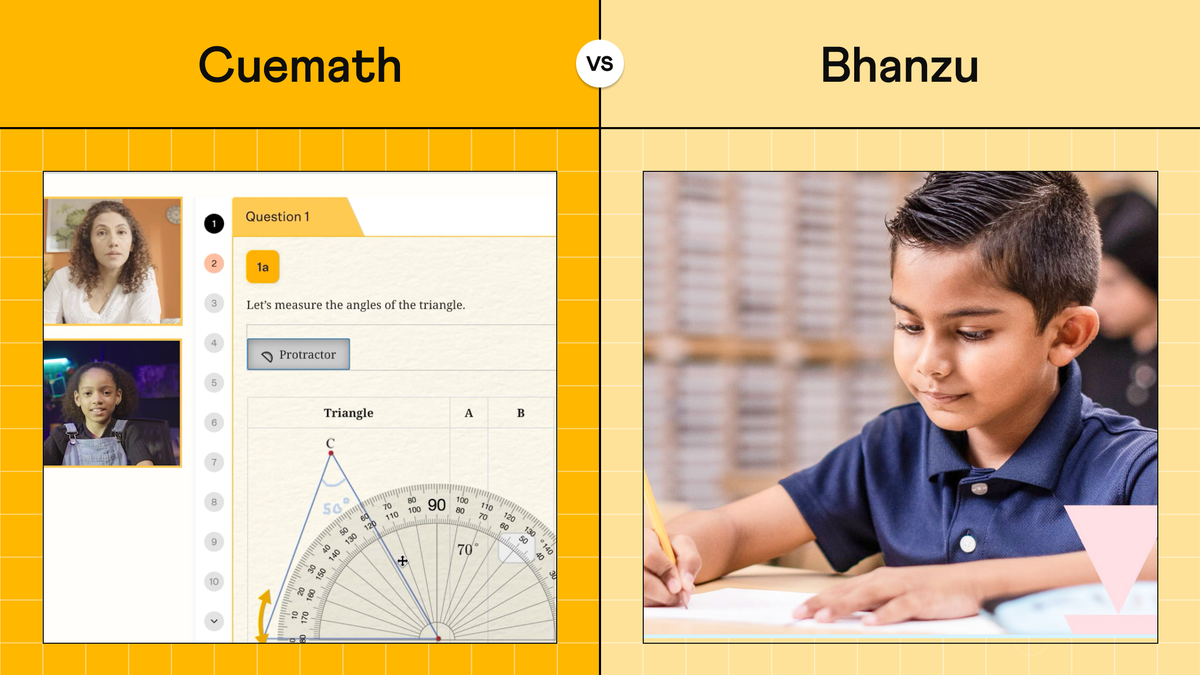
When choosing between Bhanzu and Cuemath, the decision comes down to the specific goal: speed versus conceptual depth.
Especially, as a student reaches high school, where math shifts from simple arithmetic to abstract analysis, the habits they form now (seeking the trick versus seeking the logic) will define their success in STEM.
Bhanzu believes in rapid calculation and mental gymnastics. Cuemath is based on deep conceptual understanding and real-world applications of math.
In an era where the Digital SAT allows calculators and high school math demands abstract thinking (Calculus, Trigonometry), calculation speed is becoming obsolete. Here is my honest review of both math tutoring platforms.
Key Takeaways
- Bhanzu's focus: Rapid mental calculations, shortcuts, and competitive advantage.
- Bhanzu's teaching method: Builds confidence through the ability to solve arithmetic problems faster than a calculator.
- Bhanzu is best suited for: Students struggling with basic math or younger children needing an engagement boost through gamified speed.
- Cuemath's focus: Real-world applications of math and logical thinking exercises through worksheets and games.
- Cuemath's teaching method: 1:1 live online math classes with the same tutor long-term. Tutors make a customized learning plan and goal as per the student's needs (school, test prep, or college).
- Cuemath is best suited for: K-12 students needing any kind of math help, to get ahead in school, ace exams, or nurture mathematical thinking.
Cuemath vs Bhanzu: A Quick Comparative Analysis
The following table provides a side-by-side summary of the two platforms, based on the top parameters I feel are important for any student.
Cuemath vs Bhanzu: Curriculum and Class Format
Cuemath isn't just math tutoring in the traditional sense. They have built what they call a complete math ecosystem. On the other hand, Bhanzu is founded by the 'World’s Fastest Human Calculator,' and the whole philosophy is built on speed.
My primary check was Trustpilot reviews to validate the point, and they say something similar.
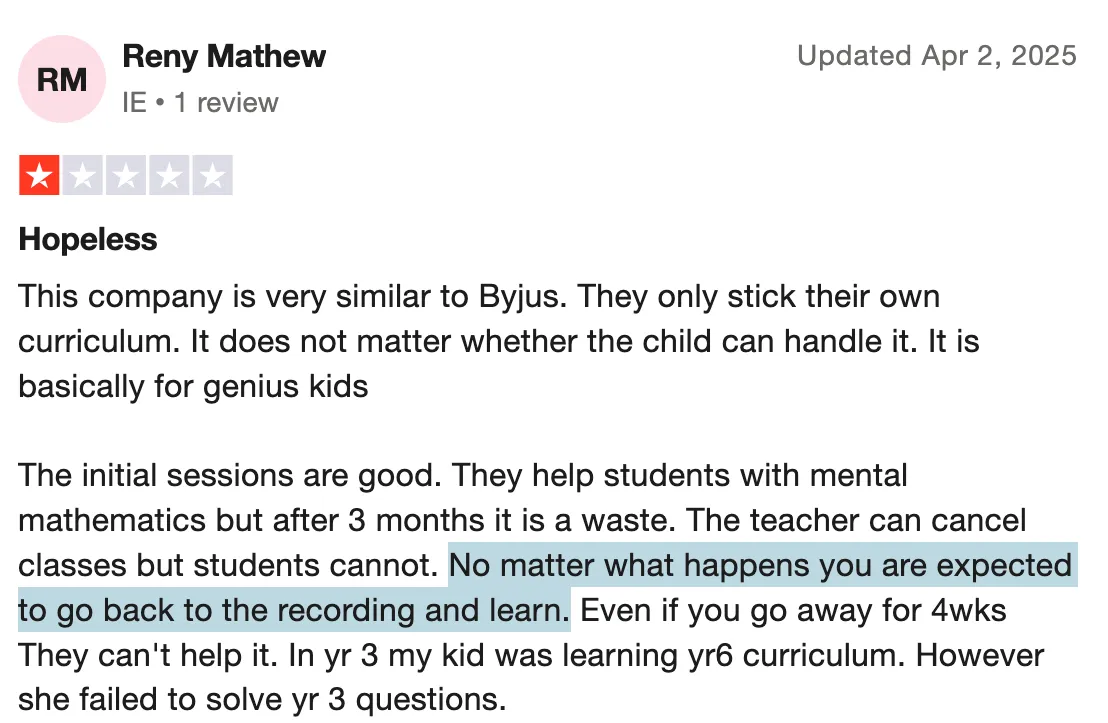
Which Approach Builds Math Skills For a Lifetime?
- For me, the ultimate metric for any tutoring platform isn't how the student does on Friday’s quiz; it’s if they remember the concept and can apply it to any kind of problem in the future.
- Cuemath plays the long game. Parents want to see real-world relevance in math, and Cuemath does that really well through worksheets, puzzles, and games.
- Logical thinking games, interactive worksheets, and mental math games - all are a part of Cuemath's regular grade-level plans.
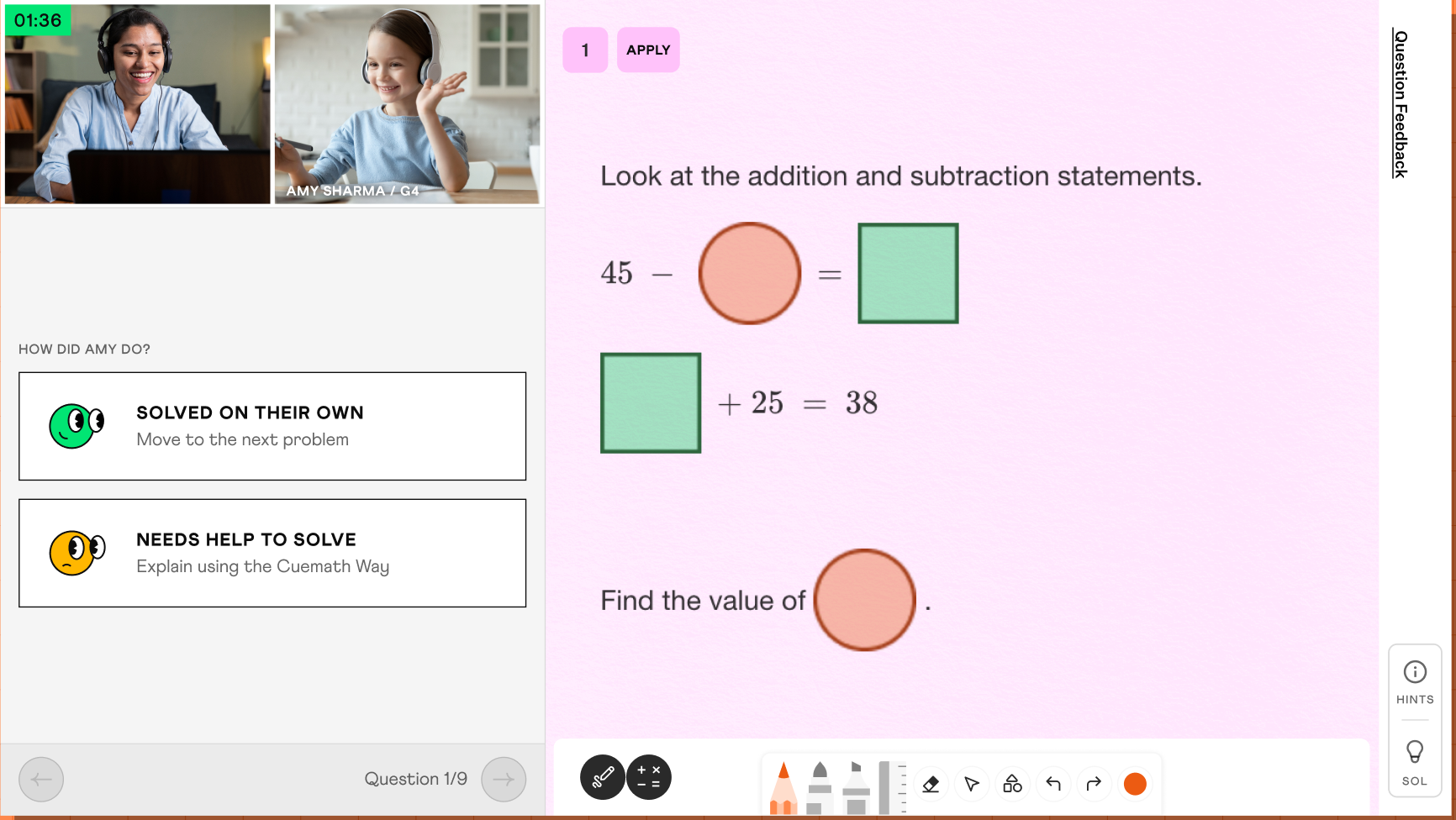
If a student understands why a function works, they don't panic when the teacher changes the numbers or the format of the question. They have the tools to figure it out.
And Cuemath's results speak for themselves, here's one of their success stories about Elin, who's thriving in schools, state tests and accelerated math.
 Cuemath
My concern with Bhanzu is that it focuses more on speed math skills.
Speed tricks are highly specific. If a student learns a mental shortcut but doesn't use it for a month, it tends to fade away. Being able to multiply fast is great, but it doesn't help you integrate a complex function in Calculus.
Which Program is Better for Test Prep or Math Competitions?
I analyzed how both platforms prepare students for high-stakes testing like the SAT and Math Olympiads (AMC 8, Math Kangaroo), and the difference in approach is surprising.
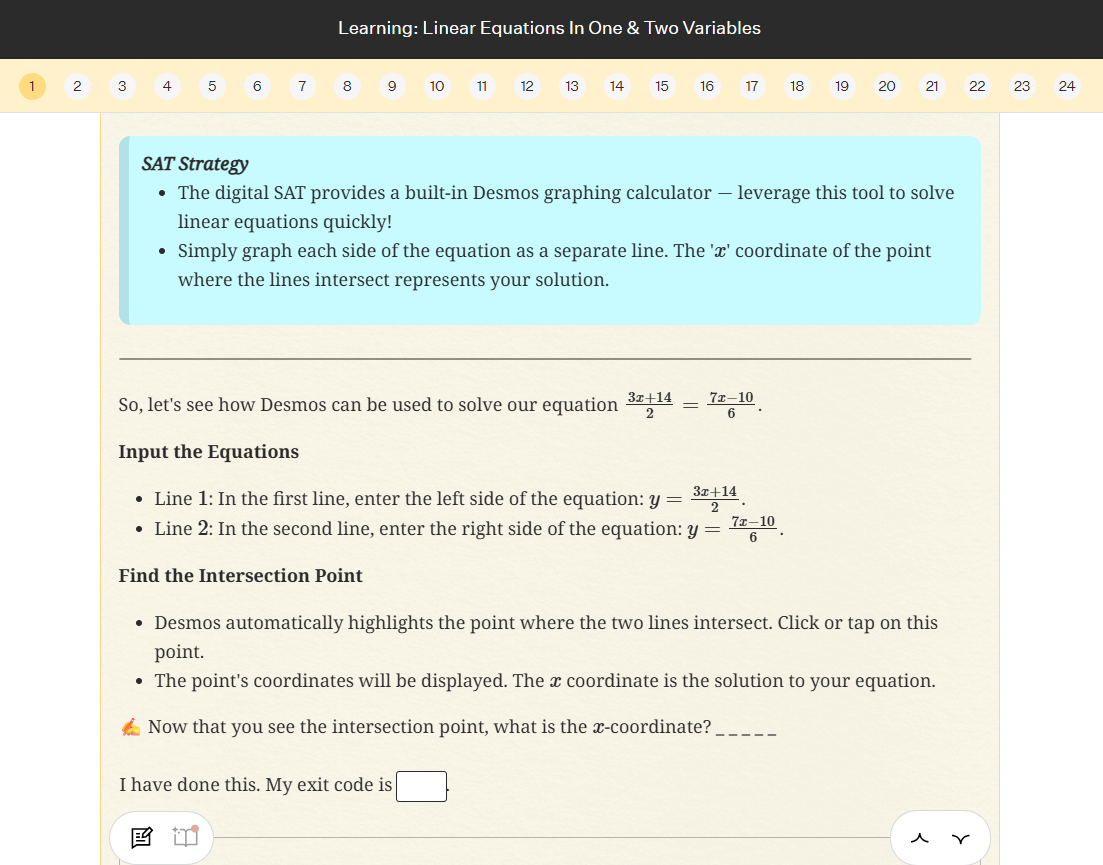
Bhanzu’s speed tricks are less of a competitive advantage now because the test itself provides a speed tool (the calculator).
Cuemath’s emphasis on verbal reasoning and data interpretation aligns better with the new test format, which rewards understanding what to calculate over how fast you can calculate it. They are conditioned to derive solutions, whereas a speed-focused student might struggle when standard tricks don't apply.
Cuemath vs Bhanzu: Comparing Cost vs Value
Okay, let's get down to the basics: what's this all going to cost?
Cuemath is built to be accessible. Their plans are straightforward and, honestly, a steal for what you're getting. Their classes start at just $24 per session for high school students. Let me repeat that: $24 for a private, 1:1, personalized class with a certified tutor.
The best part? You can try a free trial class before committing to any plan. It is 100% free and completely risk-free.

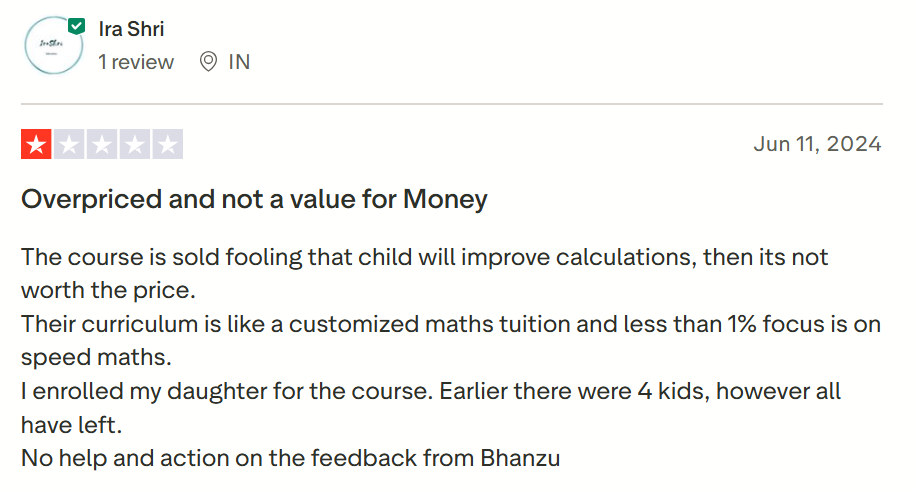
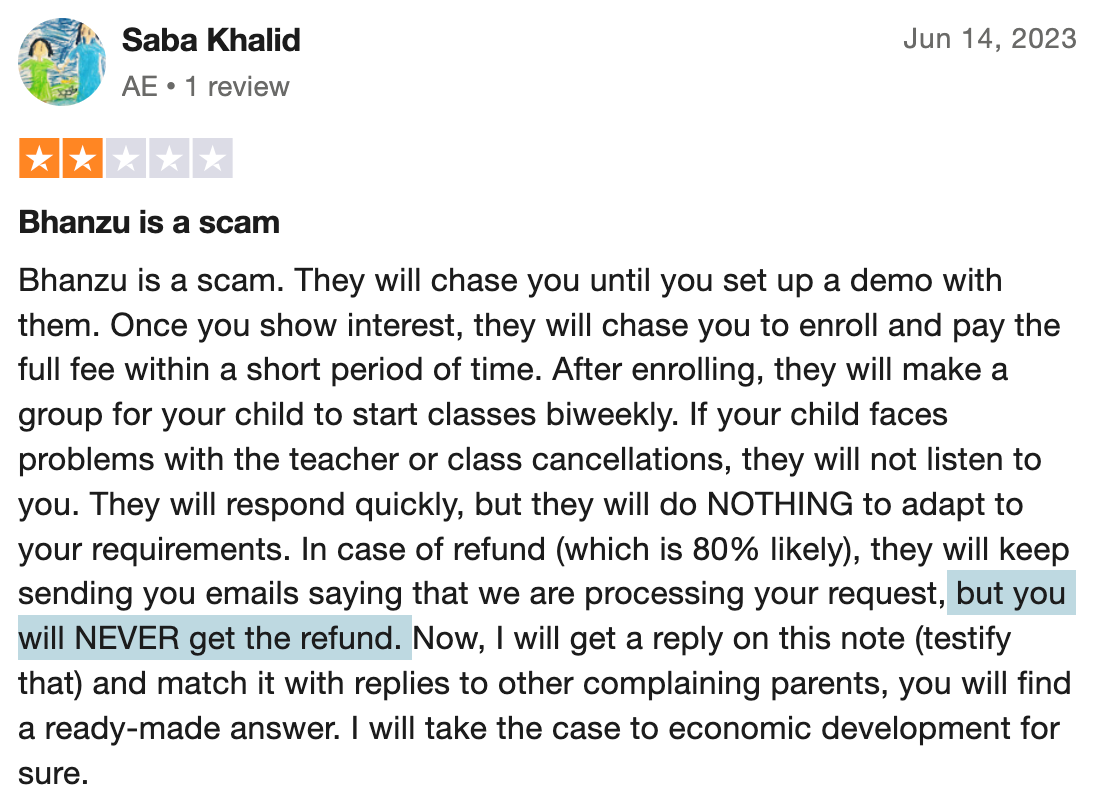
Bhanzu's plans start from $8 to $10 per session, and they offer a full refund policy. However, most of the parent reviews I read online regarding their pricing plans were quite negative, saying the cost does not match the true value, and their refund policies are not up to the mark.
Conclusion: Which Program is Better?
- Bhanzu is built for one thing: speed on a specific track (tests and competitions).
- If you have a child who is already excellent at math and just wants to be more competitive, they might prefer Bhanzu.
- Cuemath, on the other hand, values real-world applications of math and logical thinking through worksheets and interactive games.
- By combining a true 1:1 personalization with 21st-century skills like data science and financial literacy—all for a fraction of the cost—it offers a far superior value proposition.
Where Hard Work Turns Into Real Results
Give your child the same structured guidance that helped thousands of students succeed. Try a FREE live Cuemath class today.
Book a Free ClassFor Students in Grades K to 12 Worldwide
Frequently Asked Questions (FAQs)
Ques: Is Bhanzu or Cuemath better for high school?
Ans: For a high school student, Cuemath is generally the better choice. High school math in the US (Algebra II, Pre-Calculus, Calculus) shifts away from arithmetic and toward abstract reasoning and multi-step problem solving.
Bhanzu’s speed math curriculum is heavily focused on mental calculation tricks. In a high school class (example, Calculus class), the challenge is conceptual understanding and step-by-step logic, not arithmetic.
Ques: Does Cuemath align the classes with the school's curriculum?
Ans: Cuemath’s US curriculum is aligned with Common Core State Standards (CCSS) and can be further customized to match specific state standards (like TEKS in Texas) or a student’s specific school curriculum.
Ques: Is Bhanzu good for competitive exams like SATs, AMCs, etc?
Ans: The new Digital SAT allows the use of a graphing calculator (Desmos) for the entire math section. This has made mental math speed (Bhanzu’s core value) largely obsolete for the test. The new challenge is logical modeling, setting up the equation correctly, which favors Cuemath’s approach.
Ques: Is Cuemath or Bhanzu better for a student who is behind in math?
Ans: If a student is behind, it usually means they have a conceptual gap from a previous year (e.g., struggling with Calculus because they never truly understood Algebra II functions).
Cuemath’s 1:1 model allows the tutor to identify this specific gap and fix it. They build a safety net of understanding. Bhanzu's group-based, speed-focused drills can often increase anxiety for a struggling student who sees peers calculating faster, reinforcing the feeling that they are bad at math.

About the Author
Nikita Joshi
Math Educator | Writer @ Cuemath
Math educator & writer by day, storyteller by night.
View My LinkedIn
Read more
Cuemath vs Khan Academy: Which is Better for US Students in 2026?
In this comparison, we review Cuemath and Khan Academy side by side, covering teaching format, pricing, and what US parents say. We review both platforms grade by grade and by learning need so you can find the right fit.

CogAT 97th Percentile and Gifted Placement in Grade 7: Harsheen's Story
Harsheen Kaur scored in the 97th percentile on the CogAT and qualified for the Gifted and Talented program in Grade 7. Two years with Cuemath turned a student who was uncomfortable with math into one who stays ahead of her class.
Cuemath vs Mathnasium: Which is Better for US Students in 2026?
For this comparison blog, we review Cuemath and Mathnasium side by side, covering teaching format, pricing, tutor quality, and what US parents say. We break it down grade by grade so you can find the right fit.

Continental Mathematics League Gold Medal: The Grade 2 Journey of Aayansh
Aayansh is a Grade 2 student in the USA who won a gold medal at the Continental Mathematics League two years in a row. This is a story about what happens when a naturally curious child meets the right learning environment.