College Readiness Math in High School: A Complete Guide
Many students pass high school math but still feel unprepared for college. This blog explains what true college readiness means and how strong foundations in high school prevent remedial classes in college.

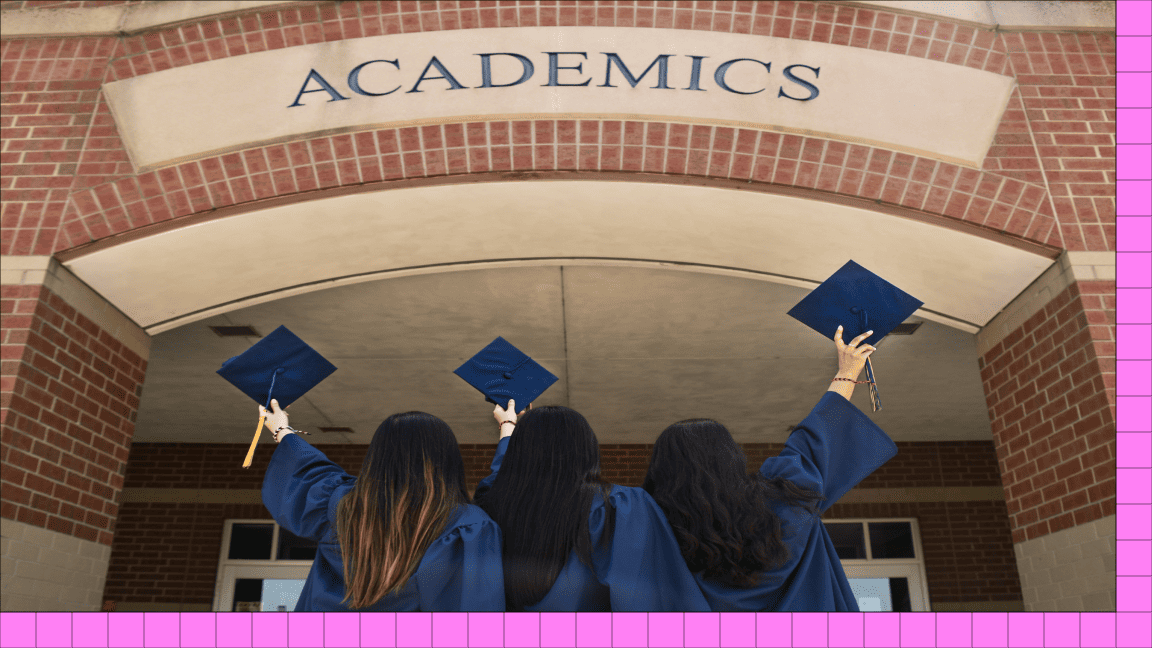
"Are you ready for college?"
It's a question high schoolers hear constantly, and one that can feel exciting, nerve-wracking, or downright overwhelming. For many students, the biggest surprise comes when they step into their first college math class and realize just how different it feels from high school math.
Here's what I've observed as an educator: most students complete their high school math requirements and still struggle with college-level mathematics.
Why? Because college readiness isn't just about passing exams, it's about having the skills, confidence, and mathematical thinking to succeed in college courses without needing remedial help.
At the heart of this readiness is a strong foundation in high school math.
This blog breaks down what college readiness math really means, why the high school years are so critical, and how building the right mathematical foundations now can make your transition to college smoother and more successful.
Key Takeaways (TL;DR)
- College readiness math means a student can handle college-level math without needing remedial courses.
- Nearly 40% of freshmen end up in remedial math, which is costly and slows graduation progress.
- Strong foundations in Algebra I & II, Geometry, Statistics, and Precalculus are essential for succeeding in college math.
- High school math develops the core analytical and problem-solving skills colleges expect from Day 1.
- Without these fundamentals, even introductory college math can feel confusing and overwhelming.
- Guidance counselors, teachers, and structured support programs help students close learning gaps early for college readiness.
- Cuemath’s one-on-one personalized learning strengthens understanding, boosts problem-solving, and builds the confidence that the high schoolers need for college.
- The goal isn’t just to pass tests—it's to build real math skills and genuine college readiness.
What Is College Readiness?
College readiness in mathematics means a student can enter a college-level math course—whether it’s College Algebra, Statistics, or Calculus—at any two- or four-year institution and succeed without needing remedial support. Simple to define, but challenging to achieve.
Almost every two-year or four-year college—regardless of major—requires students to complete at least one credit-bearing math course.
This could be:
- College Algebra
- Statistics
- Quantitative Reasoning
- Math for Liberal Arts
So, even if you're majoring in Psychology, Business, Media, Nursing, or the Humanities, you still need to be prepared for at least one college-level math class.
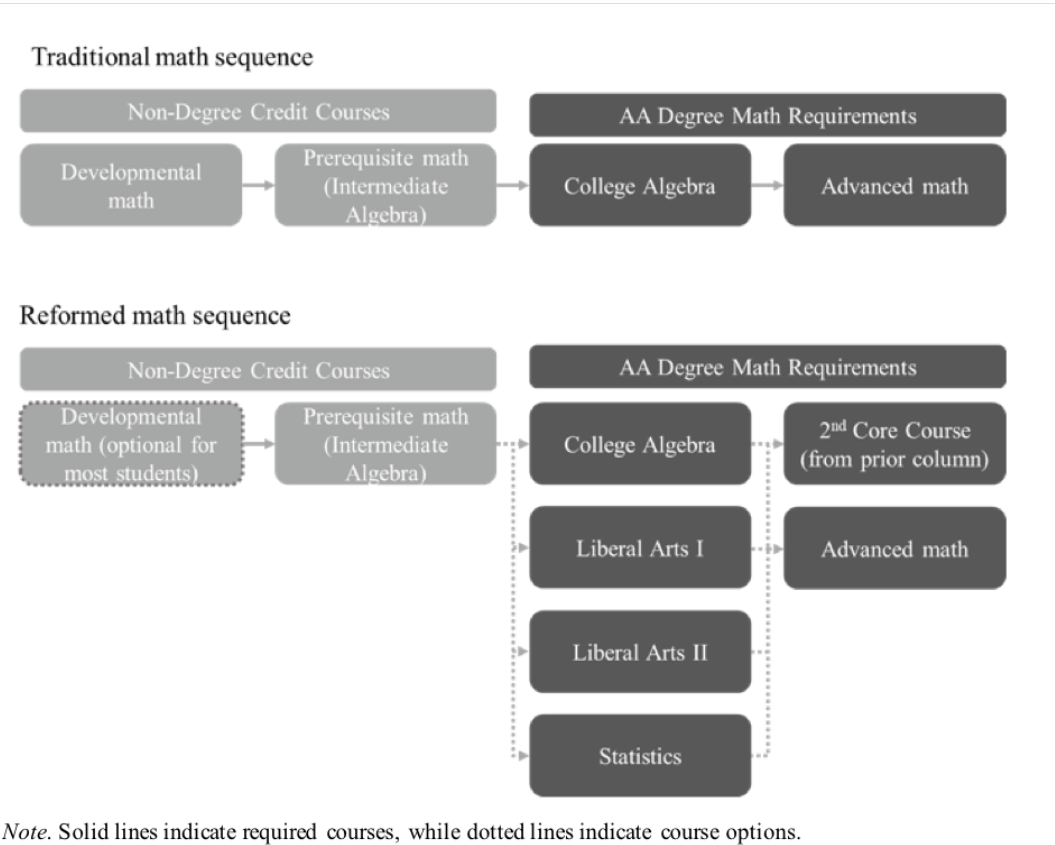
A clear example of this comes from Florida’s traditional college math pathway. Students who aren’t college-ready must first complete developmental math and then a prerequisite course like Intermediate Algebra, neither of which counts toward their degree. Only after this detour can they take College Algebra, the actual credit-bearing requirement.
Why High School Math Matters for College Readiness?
College readiness isn't achieved through a single course or test score—it's built gradually through years of meaningful mathematical experiences.
The mathematical skills you build in high school—algebraic thinking, data interpretation, geometry, and problem-solving- directly shape how well you'll handle college academics. Without these fundamentals, even basic college math courses become an uphill battle.
The High School Math Topics That Strengthen College Readiness
- Algebra I & II form the backbone of all college math. This includes working with equations, understanding functions deeply, solving systems, and manipulating quadratic expressions. These aren't just abstract skills—they're the language of mathematics that every college course assumes you speak fluently.
- Geometry includes logic, coordinate geometry, and transformations. This logical framework transfers to problem-solving across all college subjects.
- Statistics & Probability teaches students to make sense of data—a critical skill in our data-driven world. Whether analyzing research in psychology or interpreting polls in political science, college students constantly work with statistical concepts, data interpretation, and understanding variability.
- Pre-Calculus bridges algebra and calculus through trigonometry, sequences, series, and mathematical modelling. For STEM-bound students especially, this preparation is essential. But even non-STEM majors benefit from the analytical thinking these topics develop.
- Quantitative Reasoning connects mathematics to real life. This includes financial literacy, proportional reasoning, and applying math to solve authentic problems. Colleges expect students to use mathematics as a tool, not just to manipulate symbols on paper.
Together, these topics create the analytical framework that college courses assume you already have. When this foundation is solid, college math feels challenging but manageable. When it's shaky, even introductory courses can feel impossible.
Build true college-ready confidence.
With Cuemath’s proven curriculum and expert teachers, your teen develops deep understanding—not memorization—and masters high school math conceptually.
What Happens If You Are Not College-Ready?
Students who are not college-ready often:
- Get placed in remedial math courses that don’t count toward their degree
- It takes longer to graduate and spend more on tuition
- Experience academic stress and lower confidence
- Struggle in courses requiring math, even in non-STEM fields (psychology, business, economics). Lack of readiness is one of the top reasons for first-year college dropout.
Resources to Help You Become College Ready
If you're unsure where you stand or what skills need strengthening, reach out to:
- Your high school guidance counsellor can assess your current math level and recommend the right courses or additional support to keep you on track for college.
- Your academic advisor understands college requirements and can help you identify any gaps between where you are now and where you need to be.
- A trusted math teacher knows your learning style and can pinpoint specific concepts that need more attention before you graduate.
- Building Skills Beyond the Classroom
While high school courses provide the framework, many students benefit from additional support that offers deeper practice and conceptual understanding. This is where programs like Cuemath make a real difference.
Cuemath’s Approach to College-Ready High School Math
Cuemath’s one-on-one live personalized math tutoring strengthens both understanding and problem-solving, so students transition smoothly from high school to college.
✔ Strong Content Coverage
Cuemath goes deeper into the advanced algebra, precalculus, trigonometry, and introductory calculus topics that colleges expect—areas many high school math programs rush through.

✔ Conceptual, Not Rote, Learning
Instead of memorizing steps, students learn through visual reasoning and real-world applications. This makes college-level concepts feel familiar and supports actual college readiness.
Interactive and visual lessons of Cuemath's high school curriculum
✔ Teachers Are Vetted and Highly Skilled
Cuemath’s teachers are carefully selected for strong high school math expertise and trained to teach for deep understanding—so students build the confidence and clarity needed for true college readiness.
✔ Personalized, Adaptive Practice
The platform identifies gaps early and strengthens fundamentals before students move ahead, preventing the struggles many face when high school math concepts are shaky.
✔Topics That Give Students a Real Edge
Cuemath also introduces high-impact concepts many students never see in regular high school math, such as:
- Polar and parametric coordinates
- Limits, derivatives, and integrals
- Basics of mathematical proofs
Early exposure to these ideas dramatically boosts college readiness.
- Depth over speed, so understanding lasts
- Regular problem-solving to build resilience
- Independent learning skills are essential beyond high school
- Frequent check-ins to catch misconceptions early
Meet the students who used Cuemath to level up their math—and walk into college, ready. Read their stories:
 Cuemath
College ready High school Math student
 Pooja Purohit
College ready High school Math student
Conclusion
College readiness in math isn’t about chasing scores—it’s about giving students the clarity and confidence to handle real college-level work. When high schoolers learn math conceptually, practice it consistently, and receive support that truly meets their needs, they walk into college feeling prepared rather than overwhelmed.
With Cuemath’s structured curriculum and thoughtful teaching, students shift from “I hope I can do this” to “I know I can.” Strong high school math foundations don’t just help them pass one class—they set them up for success throughout college and in any career that relies on problem-solving.
In the end, that’s what college readiness should be: real skills, real confidence, and a real chance to thrive.
Ready to build true college-ready confidence?
Give your child the support that makes high school math finally click.
FAQs
Q1: What is the meaning of college readiness in high school?
College readiness math usually includes high school math essentials like Algebra 1, Algebra 2, Geometry, and Pre-Calculus — but taught with a focus on real-world reasoning. Colleges want to see mastery of:
- linear & quadratic functions
- systems of equations
- polynomials
- rational expressions
- trigonometry basics
Think of it as: the must-know math from high school that prepares you not just to pass, but to thrive in college.
Q2: Is College readiness math basically SAT prep in disguise?
No — College readiness math is broader and deeper than SAT prep. While SAT math overlaps with high school math topics, college readiness focuses on long-term skills like algebraic thinking, real-world modelling, and multi-step problem-solving.
Students who develop strong college readiness skills naturally perform better on the SAT, but the reverse isn’t always true. SAT prep teaches test strategies; college readiness prepares students for actual high school math success and a smoother transition into college-level courses.
Q4: What should 10th graders do to prepare for college?
Here’s what every 10th grader should focus on to start building a strong path toward college.
- Focus on building strong foundations to improve grades, especially in math and science.
- Begin light SAT/ACT exposure—no heavy prep yet.
- Strengthen core math skills for future AP/SAT success.
- Start a simple achievements folder or portfolio.
- Do small volunteer or community activities.
- Learn basic life skills like email writing and organization.
- Build good study and time-management habits.
- Read regularly to improve comprehension and vocabulary.
- Explore interests through clubs, hobbies, and competitions.
- Maintain balance—sleep well, stay active, and manage stress.
Q5: Do non-STEM majors also need to be college-ready in math?
Almost every two- or four-year college requires at least one math course, even for majors like Psychology, Business, Media, Liberal Arts, and Nursing. Parents and students often assume non-STEM paths avoid math, but college readiness is essential across all majors.
Q6: What SAT score shows college readiness?
A score of around 480 in Reading & Writing and 530 in Math is generally used as the college readiness benchmark on the SAT.
So in total, a student hitting about 1010 combined is considered “college-ready” by most colleges and the College Board.
Quick breakdown:
- Evidence-Based Reading & Writing (ERW): 480+
- Math: 530+
- These indicate the student is likely prepared for entry-level, credit-bearing college courses without remediation.
Q7: How can I tell if my teen is actually college ready in math?
Look for these signs of strong college readiness:
- Comfort with algebraic manipulation
- Ability to interpret graphs and data
- Strong reasoning and multi-step problem-solving
- Confidence working without being prompted
If these are shaky, even a student with good grades may struggle in college.
Q8: Is College Readiness Math only for struggling students?
No. Strong students use it to get ahead, build AP-level reasoning, or prepare for competitive programs. Struggling students use it to fill gaps. It works for both because it emphasizes understanding, not memorizing.
Q9: Does college readiness math help with AP Precalculus and Algebra 2 in high school?
Yes, definitely. AP Precalculus and Algebra 2 demand higher reasoning skills and problem interpretation. College-readiness math strengthens the exact foundational skills that make high school math courses easier and more intuitive.
Q10: Can programs like Cuemath help with college readiness?
Yes. Cuemath strengthens high school math foundations, covers advanced Algebra, Precalculus, and Statistics, and uses conceptual learning to build college readiness. This reduces the risk of students landing in remedial math.

About the Author
Neelima Kotamaju
Educator
With 10+ years in EdTech, I design learning experiences rooted in pedagogy, classroom insights, and child psychology, ensuring my work is meaningful and engaging.
This blog has been reviewed by Cuemath’s team of expert tutors & curriculum specialists, trained in US Common Core State Standards.
View My LinkedIn